Remediation
A quote says the mold has to come out. Check the water first.
(315) 640-3590 Tap to call
A number on a page is not a plan. Before you sign for a tear-out, ask which water got in and what the assessor wrote down. Send us what you know, and we book the assessment first, then a separate New York company to carry out that plan.
$100 off your first job, credited once you book.
Four waters
Which water got in? Start there.
Choose the picture closest to your basement. Each points to the job to read first.
Sound surge
Sound Shore
Tidal Hudson
River towns
Brook or river
Valley towns
Groundwater or rain
Higher ground and north county
Water note
Before anyone opens a wall
Eight things to settle first. A phone and a tape measure are enough.
We help you pin down what water reached the house, then book the assessment first and the cleanup or drying after, with separate New York companies as state law requires.
Start your water note
Tell us what you know about the water. Sending it commits you to nothing.
The Westchester water-first promise
- You pay us nothing to ask, and you owe us nothing after.
- We start with the water before anyone quotes a removal.
- Your assessor will never be the company doing the cleanup.
- Your $100 is credited exactly as our Terms describe.
Whoever does the work answers to you under your own contract with them.
Mold Removal Westchester County, (315) 640-3590
$100 off your first job
The $100 is credited once your first Westchester job is booked.
- We pay the $100, and the contractor's price stays the same.
- One credit for each customer at each address.
- Book the job on or before December 31, 2026.
- Tell us about the credit when you book.
Questions
Straight answers on the water
- 1
Can I skip the assessment and go straight to removal?
You can ask, but the state keeps the assessor and the remediator as two companies, and the plan is what you check any quote against. Without it, you are trusting a number.
- 2
What does a remediation company need to be licensed for?
Remediation of areas over ten square feet needs a New York mold remediation license displayed at the work site. Ask for the number and check it with the state.
- 3
Does the water damage standard change what gets removed?
Yes. With river, sea or sewer water, remediation comes before drying, and porous materials may have to be removed instead of dried in place.
- 4
Will the mold come back after removal?
It can if the moisture source stays. County health advice is to trace what keeps the area wet and fix that, or growth returns.
- 5
Can the company that removed the mold also clear it?
No. Clearance comes from the assessor, and the cleanup company is a separate company. That keeps the person checking the work from being the person who did it.
- 6
What should I do with wet items before the crew arrives?
Photograph them where they lie and list anything you move or throw out, with the date. Clean-water areas should start drying within 24 to 48 hours. Do not disturb visible mold growth.
- Write down what the water wasA river or sewer source changes the whole job.
- Measure the water line in inchesHeight shows which materials were wet.
- Note when it arrived and when it stoppedHours and days decide whether drying in place is still possible.
- List every material the water touchedPorous materials may have to come out.
- Photograph everything before anything movesPhotos help if you make an insurance claim.
- Ask for the New York mold license numberThe state has a public lookup to check it.
- Get the scope in writing before work startsA written plan lists rooms, methods and what comes out.
- Ask who assesses and who does the cleanupNew York requires two separate companies for mold.
Your water note
Four answers a contractor needs. Write them down before the first call.
What water was it?
Supply line, rain, stream, river, seawater or sewage?
The standard grades river, sea and sewer water as most contaminated. It is set on inspection.
How high did it get?
Find the line on the wall and measure it.
Height shows how much drywall and insulation got wet. Write it in inches.
How long did it sit?
Count the hours, days or weeks before anything dried.
EPA gives you 24 to 48 hours to dry wet materials. Past that, mold can grow.
What did it touch?
Drywall, insulation, carpet, framing, block, a furnace or a panel?
The standard asks which materials were affected. Porous ones may come out.
This fits when
What puts remediation on your list
The assessor wrote a plan
You hold a written plan and now need a company to do the work. New York requires that company to hold a mold license.
Mold covers more than a small patch
The affected area is larger than about ten square feet, or you cannot tell how large.
Sewage or river water was involved
Dirty water touched the walls or floor, and you were told to call a professional.
Drywall or insulation stayed wet
Wet porous material sat for days and now smells or shows growth.
A quote arrived with no plan behind it
Hold the quote. Ask for the assessor's scope and compare line by line.
Wall section
The remediation job, drawn on a wall
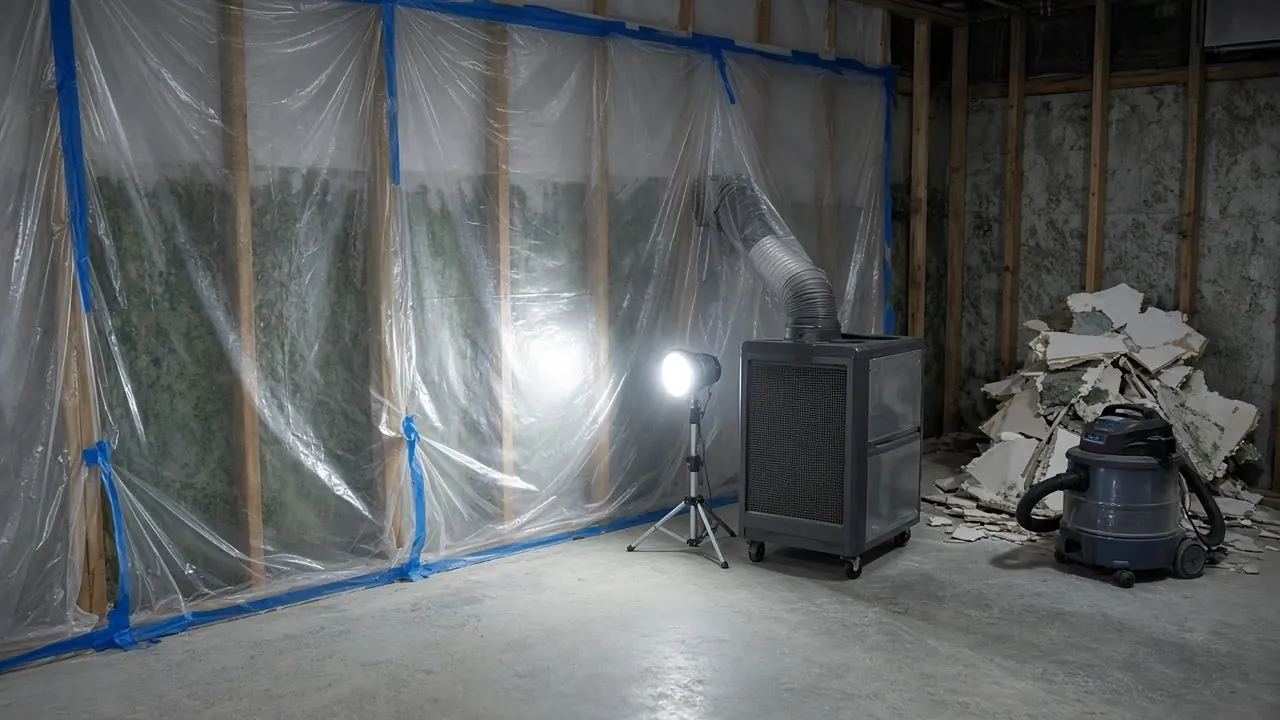
- ContainmentSealed barriers keep dust from moving to other rooms.
- Removal lineThe plan marks where wet material stops and sound material starts.
- ClearanceThe area stays open until the assessor signs off.
The job
Inside the remediation job
Containment of the work area
Ask how the area will be sealed and how air will be kept from spreading.
Removal of materials the plan lists
Ask for the list in writing, with quantities, so you can check what comes out.
Cleaning of surfaces that can stay
Ask what method is used on studs, block and slab, and why.
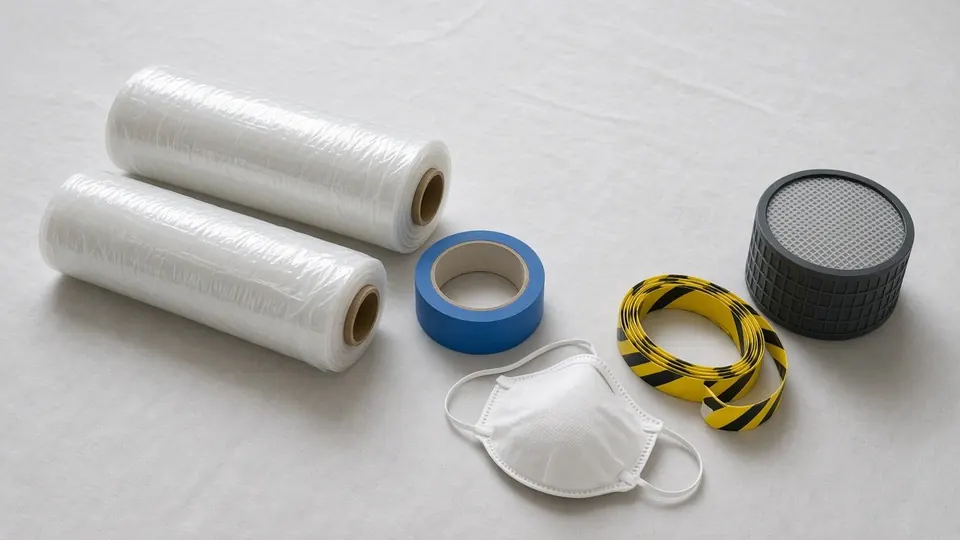
Protection for workers and your home
Ask what protective equipment the plan names and who pays for disposal.
Handing the area back for clearance
The assessor decides if the cleanup passes. Ask when they will return.
How the water sets the size of the removal
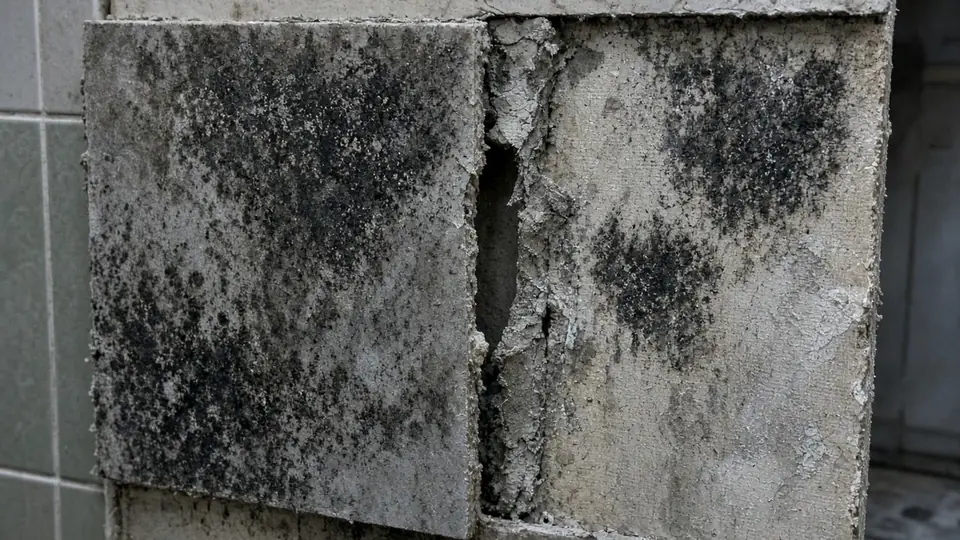
Two houses can have the same visible mold and need very different work. The difference is the water. If a clean supply line leaked for a day, much of the wall may stay. If river water stood in the basement for a week, the plan may take out insulation, drywall and carpet that never showed any growth.
That is why the plan comes first. The assessor's job is to say which materials are affected and which are not. Your job is to keep the cleanup company to that list. A company that wants to remove more should explain why, in writing.
Tell us the water and the date.
Ask the question plainly: what did you assume about the water, and what in this house tells you that you are right?
Containment and what stays in the house
Remediation is a controlled job. The area is isolated, the wet or moldy material is taken out in a way that does not spread it, and the surfaces that remain are cleaned. For contaminated water, the standard calls for contamination controls and worker protection.
Ask what the barrier is made of, how the air will be handled and how waste leaves the house. Walk the route with the supervisor before work starts. If they cannot describe it, that is your answer.
Book the assessment first.
EPA says an owner can usually handle mold under about 10 square feet, but should call a professional when sewage or other contaminated water caused the damage. If that describes your basement, do not start the job yourself.
Older houses and lead-safe work
If your house was built before 1978, a mold job can disturb painted trim, plaster and drywall. EPA's Renovation, Repair and Painting Rule asks paid firms to hold lead-safe credentials and follow lead-safe practices whenever they disturb paint in a house of that age.
Ask the company if it holds that credential and to show it to you. Add a line to the contract saying which work practices apply. This is a question for the cleanup company, not the assessor.
Why the company that cleans cannot grade its own work
New York keeps the two jobs apart. The licensee who assesses cannot remediate the same property, and the written clearance report comes from the assessor, only when no visible mold remains and the plan was followed.
So you hold the final word. If the report says the area does not pass, you ask the company back under your contract. Get that promise in writing before work starts, and keep both the plan and the report.
Know the date the water came in?
No plan yet? Phone (315) 640-3590 or send your water note, and we put the assessor first, so you hold a plan before any company prices the work.
Which water
How the water changes the remediation work
- Sound surge
- Seawater is listed as the most contaminated category. Ask whether the plan takes out wet porous materials, and who decided.
- Tidal Hudson
- River water gets the same listing. Ask the assessor how long the water stood, because that sets how far the removal goes.
- Brook or river
- A brook or river entered from outside. Ask the plan to show where it came in and what it wet behind the wall.
- Groundwater or rain
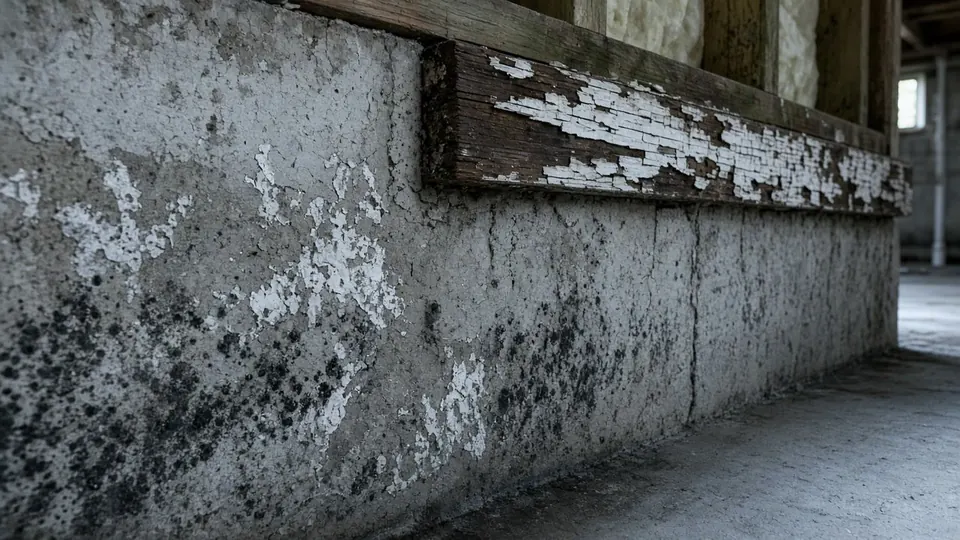
- Groundwater can wet a slab and a wall base with no flood. Ask whether the cause was fixed, because removal alone will not hold.
Basis: ANSI/IICRC S500 Consensus Body, Category of Water Damage and Weather-related Events position statement Westchester County Countywide Hazard Mitigation Plan Update 2021, Section 5.4.3 Flood
How it runs
How the remediation job runs
- 01
You hold the assessor's plan
No plan yet? We book the assessment first and you come back to this step.
- 02
We arrange cleanup companies
We tell you who will contact you, and you compare their scopes against the plan.
- 03
The company contains and removes
Ask for a start date and for notice if the scope changes.
- 04
The assessor returns for clearance
The area is closed up only after the written clearance report.
Written down
Papers to have in hand first
The written plan you signed against
Keep one copy. Any change to scope needs the change in writing.
The company's license number
Check it on the state lookup and keep the screenshot.
Waste and disposal notes
Ask how bagged material left the house and where it went.
The clearance report
It comes from the assessor and closes the job.
Tell us what water it was.
Price
What changes the price of the remediation job
- The quantity of material the plan removes sets most of the labor.
- Containment adds cost, and it grows with the size of the area.
- Water category changes the protective equipment and how waste is handled.
- A house built before 1978 may add lead-safe work practices.
- Access matters: a finished basement or a tight crawl space slows the crew.
- A second visit for a failed clearance report is a cost to settle in the contract.
The Westchester water-first promise
- You pay us nothing to ask, and you owe us nothing after.
- We start with the water before anyone quotes a removal.
- Your assessor will never be the company doing the cleanup.
$100 off your first job
The $100 is credited once your first Westchester job is booked.
- We pay the $100, and the contractor's price stays the same.
- One credit for each customer at each address.
Next steps
Where the remediation job fits

Where
Remediation in your town
River towns
Valley towns
Higher ground and north county
Guides
Read before you decide
- Sound and Hudson
Tidal water from the Sound and the Hudson
What tidal water changes about the job.
- Groundwater
Wells and septic when your basement is wet
Wells and septic: what to tell the assessor.
- All four waters
Which office handles your mold problem
Which office handles mold, and what to ask first.
Book the assessment before the tear-out.