Not in a Flood Zone, and the Basement Is Still Wet
Because the flood map was never built to answer that question for most houses in this county. Westchester's own hazard mitigation plan puts about 2.6 percent of the county's buildings inside the mapped 1 percent annual chance flood area, and it states that FEMA maps river and coastal flooding but not urban flooding, and that basements can take high groundwater with no surface flooding at all.
Already know you need someone out? Call (315) 640-3590.
What an assessment tells you that the map cannot
A flood map tells you how an insurer rates the ground under your house. It does not tell you how water is getting into your basement, and that second question is the one that decides what you fix. An assessment works out which route it is: rain running off the surface toward the foundation, groundwater pushing up from below, or something inside the house such as a supply line or an appliance. The county plan is candid about the limit, stating that while riverine and coastal flooding is mapped and studied by FEMA, urban flooding is not, and that this kind of flooding can occur outside the floodplain.
How small the mapped area really is
The county's 2021 plan estimates that 7,040 of Westchester's 269,974 buildings, about 2.6 percent, stand inside the mapped 1 percent annual chance flood area. The share runs from 0.1 percent in White Plains and Somers to 18.2 percent in the Village of Mamaroneck. That is modeled exposure, not a record of who has flooded. What it means for you is simple: sitting outside the mapped area is the normal condition for a house in this county, so it is not evidence that the water in your basement is unusual, and it is not evidence that it will stop.
Water that arrives from below, with a dry yard
Some of the most confusing basements are the ones where the lawn never floods. The county plan, citing FEMA, says high groundwater can cause problems even where there is no surface flooding and that basements are susceptible to it. It adds that seasonally high groundwater is common in many areas, while elsewhere it appears only after a long run of above-average rain. A detail worth recording for whoever comes to look is timing: whether the water shows up while it is raining or days afterward, and whether it tracks the season. That single observation narrows the search more than most people expect.
What the flood insurance record shows about zones
FEMA's own claims data backs up what the plan says. Of the Westchester flood insurance claims that received a payment and carry a recorded rated zone, about 38 percent were rated in zones X, B or C, outside the high-risk A and V zones. Of the paid claims with a recorded basement or enclosure type, about 91 percent were for buildings with a basement. If you are weighing coverage, note FEMA's own wording: most homeowners and renters policies do not cover flood damage, and a flood policy lists personal property kept in basements among the things it does not cover. Your insurer is the one to ask about your policy.
Towns that told the county their maps miss it
Asked in the county plan whether their flood hazard maps adequately address their risk, two municipalities at opposite ends of the county both said no. The City of Mount Vernon answered that the remnants of Ida revealed how flooding can take place outside of mapped flood zones. The Town of Yorktown, far to the north, also answered no, naming localized flooding at Hunterbrook, Greenwood Street and multiple areas distributed across the town. When the people who administer the maps say this, a homeowner can stop treating the map as the last word.
When the wet basement is not a flood at all
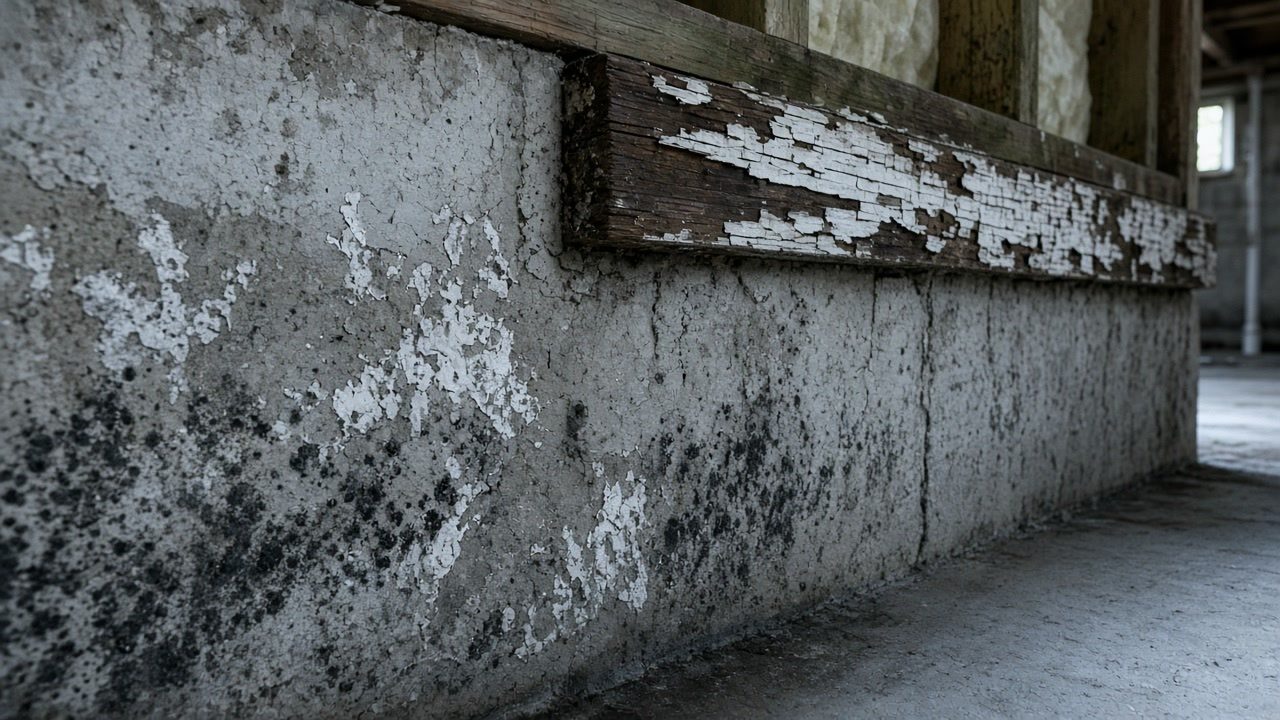
Before you spend money on drainage, rule out the cheapest answer. A below-grade room can collect moisture from the air with nothing leaking. EPA advises keeping indoor humidity below 60 percent, ideally between 30 and 50 percent, and acting quickly to dry surfaces when condensation collects on walls, windows or pipes. An inexpensive humidity gauge will tell you within a week whether that is your problem. If it is, and any growth is under about 10 square feet, EPA's guidance is that in most cases you can handle it yourself. If the readings are normal and the floor still gets wet, that is when a licensed assessor earns the fee, because the written plan New York requires has to name the source of the moisture where it can be found.
Sources used in this guide
The county plan's flood profile states: "While riverine and coastal flooding is mapped and studied by FEMA, urban flooding is not." It describes urban drainage flooding as caused by runoff from development and inadequate drainage systems, and says stormwater and urban flooding "can occur in areas outside of the floodplain".
Source: Westchester County Department of Planning, 2021 Westchester County Countywide Hazard Mitigation Plan, Section 5.4.3 Flood, accessed 2026-09-23
The 2021 Westchester County Hazard Mitigation Plan (Table 5.3.2-6) estimates that 7,040 of the county's 269,974 buildings, 2.6 percent, stand in the mapped 1 percent annual chance flood area. By municipality the share runs from 0.1 percent (White Plains, 15 of 13,986 buildings; Somers, 16 of 11,490) to 18.2 percent (Village of Mamaroneck, 1,035 of 5,699). The table's sources are Westchester County GIS 2020, NYS GIS 2021, RS Means 2021 and the FEMA 2007 flood maps.
Source: Westchester County Department of Planning, 2021 Westchester County Countywide Hazard Mitigation Plan, Section 5.4.3 Flood, Table 5.3.2-6, accessed 2026-09-23
The same flood profile, citing FEMA, states: "High groundwater levels can be a concern and cause problems even where there is no surface flooding. Basements are susceptible to high groundwater levels." It adds that seasonally high groundwater is common in many areas, while elsewhere it occurs only after a long period of above-average precipitation.
Source: Westchester County Department of Planning, 2021 Westchester County Countywide Hazard Mitigation Plan, Section 5.4.3 Flood, accessed 2026-09-23
In FEMA's NFIP claims records for Westchester County (dataset as of September 8, 2026), 9,938 claims received a net payment, totaling about $272.1 million. Of the 8,798 paid claims with a recorded rated flood zone, 3,376, about 38 percent, were rated in zones X, B or C, outside the high-risk A and V zones.
Source: FEMA, OpenFEMA NFIP Redacted Claims v3 (dataset as of 2026-09-08), Westchester County, analyzed 2026-09-23, accessed 2026-09-23
Of the paid NFIP claims in Westchester County with a recorded basement or enclosure type (6,434 claims), 5,872, about 91 percent, were for buildings with a basement, and 3,640, about 57 percent, were for buildings with a finished basement, per FEMA's claims records as of September 8, 2026.
Source: FEMA, OpenFEMA NFIP Redacted Claims v3 (dataset as of 2026-09-08), Westchester County, analyzed 2026-09-23, accessed 2026-09-23
FEMA's FloodSmart site states that "Most homeowners and renters insurance do not cover flood damage. Only a flood insurance policy will help you recover after a flood", and lists "Personal property kept in basements" among the things flood insurance does not cover.
Source: FEMA, FloodSmart, What Flood Insurance Covers, accessed 2026-09-23
Asked in the county plan whether its flood hazard maps adequately address flood risk, the City of Mount Vernon answered: "No. The remnants of Hurricane/Tropical Storm Ida revealed how flooding can take place outside of mapped flood zones." It also said flooding can take place outside flood zones during heavy rainfall and that the City does not maintain a list of flood-damaged properties.
Source: Westchester County Department of Planning, 2021 Westchester County Countywide Hazard Mitigation Plan, Section 9.2 City of Mount Vernon, accessed 2026-09-23
Asked whether its flood hazard maps adequately address flood risk, the Town of Yorktown answered "No" in the county plan, naming localized flooding at Hunterbrook, Greenwood Street and "multiple areas of localized flooding distributed across the Town", and said it does not maintain a list of flood-damaged properties.
Source: Westchester County Department of Planning, 2021 Westchester County Countywide Hazard Mitigation Plan, Section 9.23 Town of Yorktown, accessed 2026-09-23
EPA advises: "Keep indoor humidity below 60 percent (ideally between 30 and 50 percent) relative humidity", and "If you see condensation or moisture collecting on windows, walls or pipes act quickly to dry the wet surface and reduce the moisture/water source."
Source: U.S. Environmental Protection Agency, A Brief Guide to Mold, Moisture and Your Home, accessed 2026-09-23
EPA advises that if the moldy area is less than about 10 square feet, "in most cases, you can handle the job yourself", but "If the water and/or mold damage was caused by sewage or other contaminated water, then call in a professional who has experience cleaning and fixing buildings damaged by contaminated water." It also warns: "Do not run the HVAC system if you know or suspect that it is contaminated with mold."
Source: U.S. Environmental Protection Agency, Mold Cleanup in Your Home, accessed 2026-09-23
Labor Law section 945 requires a mold assessment licensee's remediation plan to include the rooms or areas to be worked on, estimated quantities of materials to be cleaned or removed, the methods for each area, the personal protective equipment, proposed clearance procedures and criteria, "an estimate of cost and an estimated time frame for completion", and "when possible, the underlying sources of moisture that may be causing the mold". Any disinfectant named must be EPA-registered.
Source: New York State Senate, Consolidated Laws, Labor Law Article 32 (Licensing of Mold Inspection, Assessment and Remediation Specialists), section 945, accessed 2026-09-23
Services this guide relates to
Need someone to look at it?
Send the details and we will come back to you.