Mold Remediation in Pelham, With the Seepage Dealt With First
Get the growth taken out of a Pelham basement by a licensed firm, in a sequence that deals with the water coming through the wall rather than cleaning around it.
Mold Remediation quote in Pelham
Tell us the town, how the water got in, and how long it has been wet. Those three answers tell us what kind of water this was, and in Westchester the kind of water decides most of what the job involves.
Would you rather talk it through? Call (315) 640-3590.
$100 off your first job
Credited by us on your first booked job.
- One credit per customer per property, on your first booked job.
- Valid through December 31, 2026.
Mention this offer when you book. Full terms.
Order of work on a Pelham removal
Sequence is what separates a Pelham removal that holds from one you pay for twice. The county plan notes that basements take on high groundwater even where there is no surface flooding, so if water is coming through the foundation, the outside work, grading, gutters or waterproofing, comes before or alongside the removal. Then rebuild the room so nothing porous sits tight against the stone. If the assessor finds only a small area on a clean surface, you can clean it yourself and spend the money on the wall.
Outside work first
Gutters, downspouts and grading that send water toward the foundation cost less to fix than a second removal.
Leave a gap at the wall
When the room is rebuilt, keep porous finishes off direct contact with damp masonry. Ask whoever rebuilds how they will manage it.
Clearance checks the cause
The post removal assessment looks at whether the source was dealt with. A wall that is still seeping is not a finished job.
Pelham's two villages, groundwater and the clearance rule
The county plan states that because the Village of Pelham comprises the total land area of the Town of Pelham, the Town "does not participate in the NFIP as an independent jurisdiction"; the plan treats the Town of Pelham as the aggregate of the Village of Pelham and the Village of Pelham Manor.
Source: Westchester County Department of Planning, 2021 Westchester County Countywide Hazard Mitigation Plan, Section 9.19 Town of Pelham, accessed 2026-09-23
The same flood profile, citing FEMA, states: "High groundwater levels can be a concern and cause problems even where there is no surface flooding. Basements are susceptible to high groundwater levels." It adds that seasonally high groundwater is common in many areas, while elsewhere it occurs only after a long period of above-average precipitation.
Source: Westchester County Department of Planning, 2021 Westchester County Countywide Hazard Mitigation Plan, Section 5.4.3 Flood, accessed 2026-09-23
Labor Law section 947 provides that for a remediated project to achieve clearance, a mold assessment licensee must conduct a post-remediation assessment, determine that the work area is free from all visible mold and that the work followed the remediation plan, and determine "that the underlying cause of the mold has been remediated"; the assessor then issues a written passed clearance report or a final status report.
Source: New York State Senate, Consolidated Laws, Labor Law Article 32 (Licensing of Mold Inspection, Assessment and Remediation Specialists), section 947, accessed 2026-09-23
EPA's Renovation, Repair and Painting Rule requires anyone paid to perform work that disturbs painted surfaces in homes, child care facilities and preschools built before 1978 to hold EPA lead-safe credentials under the rule and to follow lead-safe work practices. The Westchester County Department of Consumer Protection carries the same advisory for home improvement contractors.
Source: U.S. Environmental Protection Agency, Lead Renovation, Repair and Painting Program, accessed 2026-09-23
What mold remediation involves in Pelham

Removing growth from against a Pelham foundation
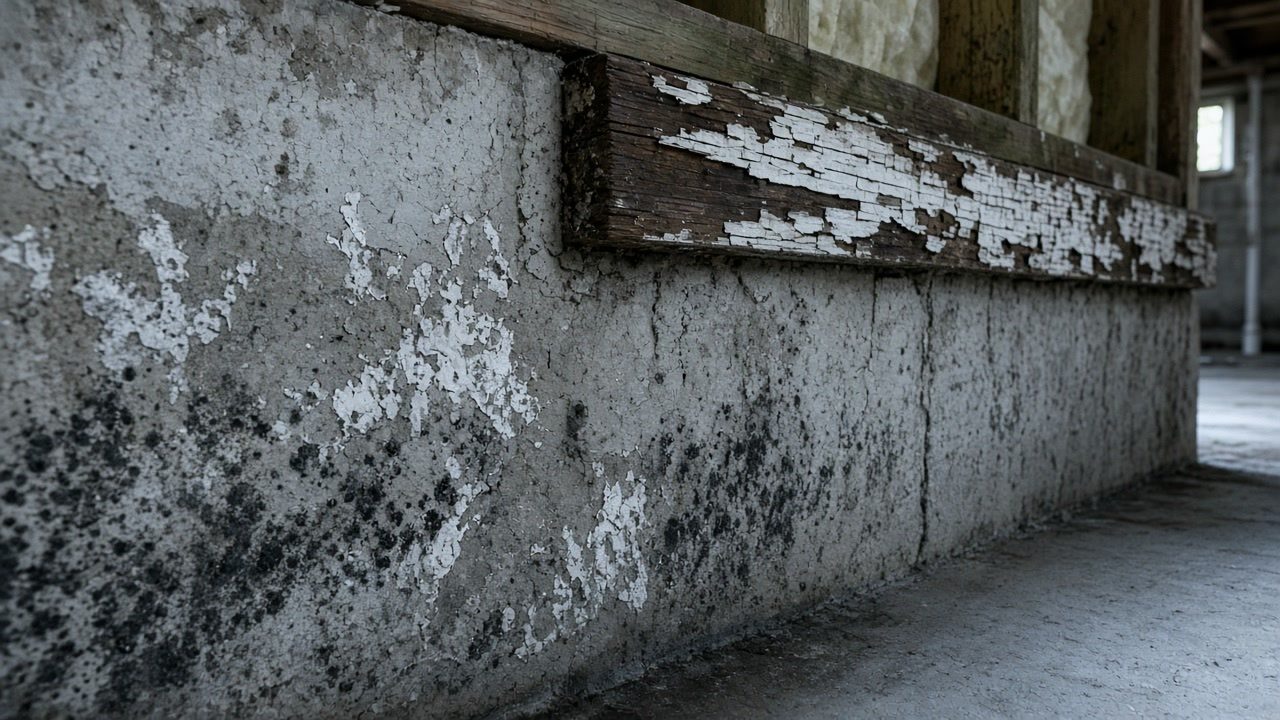
What comes out in a Pelham removal is usually what was built against the old wall: the drywall or paneling of a finished room, the insulation and framing behind it where it is too far gone to clean, and carpet laid over a slab that wicks moisture. The licensed firm we arrange seals the area, removes what the plan lists and cleans the masonry that stays. The point of doing it in order is that removal alone does not last. New York's clearance rule asks the assessor to confirm that the underlying cause of the mold has been remediated, not just the growth.

Has a Pelham assessor already written the plan?
Send what it covers and what it says about the source. We arrange a licensed remediation firm to bid, with no obligation.
Pelham questions about removal and seeping walls
Can the remediation firm waterproof the wall too?
Some firms offer related trades, but the plan names the source and the fix belongs to whoever is licensed for it. What matters is that the seepage is dealt with before the space is closed up again.
Is there lead paint to worry about in a Pelham removal?
In a house built before 1978, possibly, and most Pelham homes are far older than that. Paid work that disturbs painted surfaces there has to follow EPA's lead-safe rule.
Tell us about the Pelham wall that keeps getting wet
Where it is, when it is worst, and whether a room is finished against it. A person reads it and replies.