Ossining dry-out
Basement Dry-Out in Ossining: The First Two Days Decide Dry or Tear Out
(315) 640-3590 Tap to call
Your Ossining basement got wet and the fans have not started. Tell us what the water was and when it arrived, and we will book the dry-out or the assessment, whichever your water calls for.
Ossining dry-out: $100 off your first job on that booking, from us.
Four waters
What kind of water this was in Ossining
Sound surge
Sound Shore
Tidal HudsonYour water
River towns
Brook or river
Valley towns
Groundwater or rain
Higher ground and north county
Water note
Start the Ossining water note
Eight things to settle first. A phone and a tape measure are enough.
We help you pin down what water reached the house, then book the assessment first and the cleanup or drying after, with separate New York companies as state law requires.
Start your water note
Tell us what you know about the water. Sending it commits you to nothing.
The Westchester water-first promise
- You pay us nothing to ask, and you owe us nothing after.
- We start with the water before anyone quotes a removal.
- Your assessor will never be the company doing the cleanup.
- Your $100 is credited exactly as our Terms describe.
Whoever does the work answers to you under your own contract with them.
Mold Removal Westchester County, (315) 640-3590
$100 off your first job
The $100 is credited once your first Westchester job is booked.
- We pay the $100, and the contractor's price stays the same.
- One credit for each customer at each address.
- Book the job on or before December 31, 2026.
- Tell us about the credit when you book.
Questions
Short answers for Ossining homeowners
- 1
Can an Ossining basement that took in river water be dried in place?
Often not. The standard grades river water as the most contaminated category, which can send soaked porous materials out of the house before drying. Only a look at the house lets the assessor set the category.
- 2
How quickly should I act on a wet Ossining basement?
Aim to start within 24 to 48 hours. EPA says drying inside that window means mold will not grow in most cases. Call the day the water shows up.
- 3
Does being outside the flood zone mean my water was clean?
No. Most of the paid claims that carry a rated zone were placed outside the A and V zones. The source of your water, not your zone, sets the category.
This fits when
What puts dry-out on the list in Ossining
Clean water from a pipe, found within a day
Fast drying often works for clean water. Tell the contractor when the pipe let go and how long the water stood.
Water that came in from the yard or the street
Outside water is not clean water. Ask for the category to be set before anything is dried.
Water you cannot name
If you do not know the source, treat that as the first question. A guess about the weather does not set the category.
A line on the wall and carpet that still feels wet
Measure the line in inches. Wet carpet and pad often have to be pulled early, so decide fast.
- Write down what the water wasA river or sewer source changes the whole job.
- Measure the water line in inchesHeight shows which materials were wet.
- Note when it arrived and when it stoppedHours and days decide whether drying in place is still possible.
- List every material the water touchedPorous materials may have to come out.
- Photograph everything before anything movesPhotos help if you make an insurance claim.
- Ask for the New York mold license numberThe state has a public lookup to check it.
- Get the scope in writing before work startsA written plan lists rooms, methods and what comes out.
- Ask who assesses and who does the cleanupNew York requires two separate companies for mold.
Your water note
Four answers a contractor needs. Write them down before the first call.
What water was it?
Supply line, rain, stream, river, seawater or sewage?
The standard grades river, sea and sewer water as most contaminated. It is set on inspection.
How high did it get?
Find the line on the wall and measure it.
Height shows how much drywall and insulation got wet. Write it in inches.
How long did it sit?
Count the hours, days or weeks before anything dried.
EPA gives you 24 to 48 hours to dry wet materials. Past that, mold can grow.
What did it touch?
Drywall, insulation, carpet, framing, block, a furnace or a panel?
The standard asks which materials were affected. Porous ones may come out.
The 24 to 48 hour window and what starts it
By EPA's rule of thumb, damp materials that dry out in a day or two after a spill usually do not grow mold. The clock runs from the hour the water arrived, not the hour you noticed.
So write the time down now. If the water arrived overnight, say that. A contractor can only plan drying around what you tell them, and a clear time is worth more than a long story.
If you cannot say when the water came in, give the earliest sign you noticed: a smell, a wet sock, a stopped sump pump. The contractor will work back from there, and an honest estimate beats a confident wrong one.
Book the assessment first.
Do not wait for the perfect answer. Call with what you know and say what you do not, and tell the contractor you want the water named before the equipment is set up.
Basis: Westchester County Countywide Hazard Mitigation Plan Update 2021, Section 5.4.3 Flood OpenFEMA NFIP Claims v3 (data as of 2026-09-08), FEMA
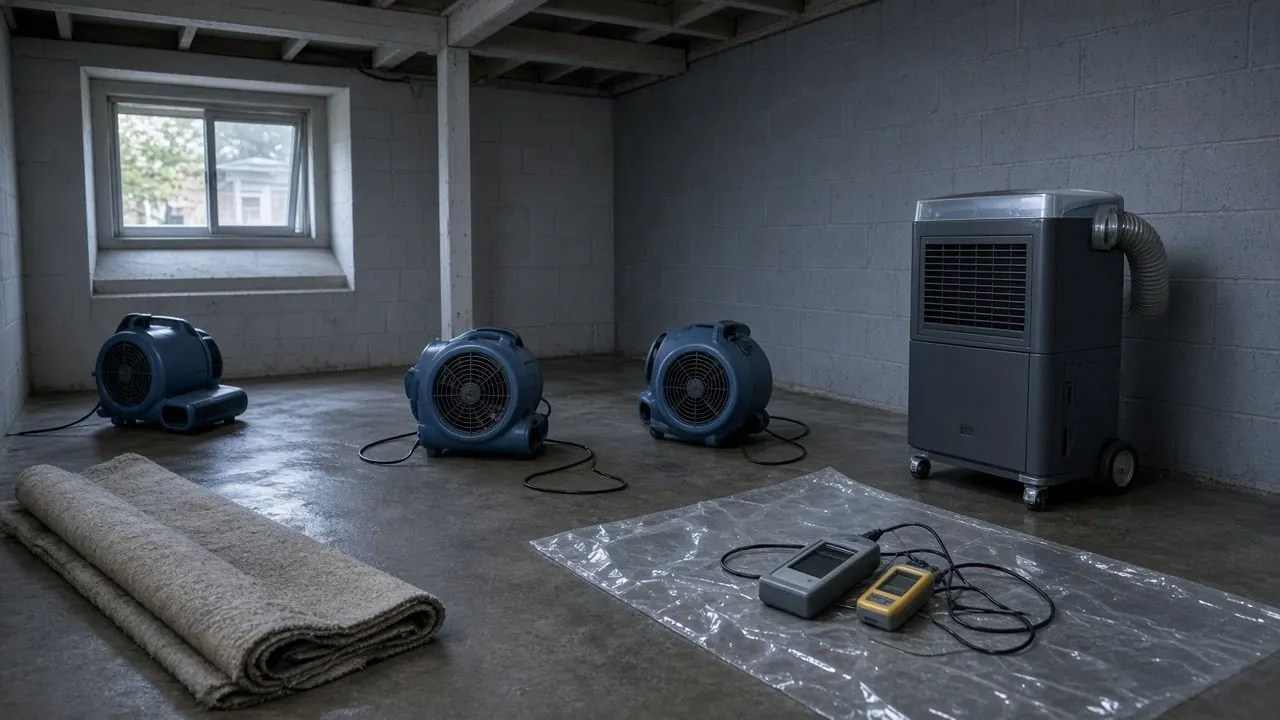
Fans are for clean water, not for every water
The water damage standard says remediation should come before restorative drying when the water is Category 2 or 3. River water is in that class, and the category is set after inspection, not assumed from the weather.
That is why a quote that jumps straight to dehumidifiers deserves a question. Ask what category the contractor assigned and on what evidence. If rain alone is the answer, the standard still does not assume weather water is the worst category.
Know the date the water came in?
One more check before the fans arrive: ask whether anything porous already sat in the water, such as carpet, pad or boxed paper. Those are the first items to pull, and pulling them early limits what the dry-out has to reach.
You can also ask that moisture readings be recorded on the first day and the last, so you hold proof that the structure reached dry.
Basis: A Brief Guide to Mold, Moisture and Your Home, US EPA ANSI/IICRC S500 Consensus Body, Category of Water Damage and Weather-related Events position statement
What the village record can and cannot tell you
The mapped area is small and the paid-claims record is short. Most of the village's 42 paid claims that carry a rated zone landed outside the A and V zones, FEMA shows.
Do not read that as an answer about your house. Your own water line, your date and your photos are the record that counts. Send them to us and we will book the right first visit.
If you rent, the same clock applies to your landlord. Send the time and the photos in writing, ask for access the same night, and note when they replied. Keep the daily readings in one place.
Start the water note before anyone quotes.
Next steps
More ways to use the Ossining pages
Nearby
Nearby pages for dry-out
Name the water, then pick the job.