Pelham assessment
Pelham mold inspection: trace how the water got into a prewar house
(315) 640-3590 Tap to call
Your Pelham basement smells musty or a wall has stained, and nobody has said where the water came from. Book the inspection first, so the written report names the source before anyone prices a tear-out.
Pelham assessment: $100 off your first job follows the booking, whatever work comes next.
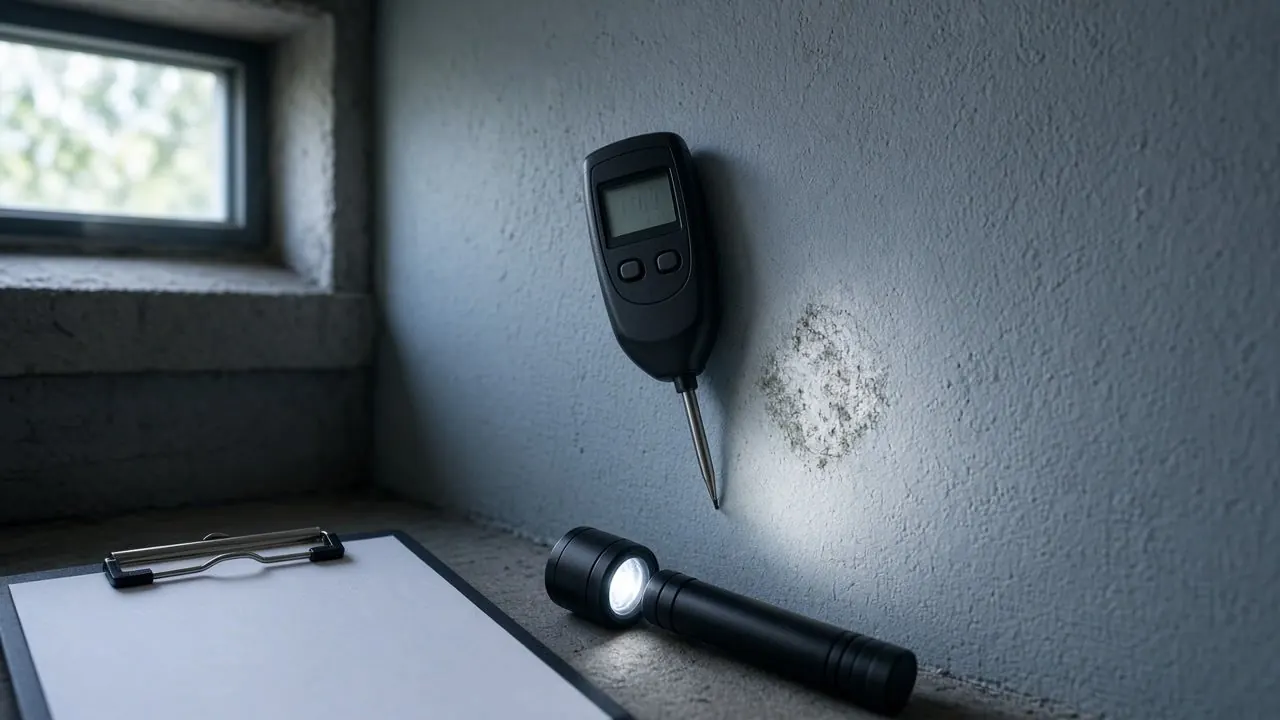
Four waters
Which water reached your Pelham house
Sound surgeYour water
Sound Shore
Tidal Hudson
River towns
Brook or river
Valley towns
Groundwater or rain
Higher ground and north county
Water note
Four answers a Pelham contractor needs first
Eight things to settle first. A phone and a tape measure are enough.
We help you pin down what water reached the house, then book the assessment first and the cleanup or drying after, with separate New York companies as state law requires.
Start your water note
Tell us what you know about the water. Sending it commits you to nothing.
The Westchester water-first promise
- You pay us nothing to ask, and you owe us nothing after.
- We start with the water before anyone quotes a removal.
- Your assessor will never be the company doing the cleanup.
- Your $100 is credited exactly as our Terms describe.
Whoever does the work answers to you under your own contract with them.
Mold Removal Westchester County, (315) 640-3590
$100 off your first job
The $100 is credited once your first Westchester job is booked.
- We pay the $100, and the contractor's price stays the same.
- One credit for each customer at each address.
- Book the job on or before December 31, 2026.
- Tell us about the credit when you book.

Questions
What Pelham owners ask first
- 1
What should a Pelham mold inspection report include?
It should name the likely moisture source, list the rooms and materials involved and say how long they were wet. State law asks the assessor's plan to list rooms, quantities and methods. If the report skips the water, ask the assessor to add it.
- 2
Can the inspector also do the cleanup on my Pelham house?
No. The state will not let one company assess and remediate the same property. Book the assessor first, read the written scope, then choose a separate company for the work.
- 3
I live in Pelham Manor, not Pelham. Does that change anything?
It changes the building department you call and the village figures the county plan uses. The steps stay the same: describe the water, book the assessor, then hold the written scope.
This fits when
When assessment is the next call in Pelham
A musty basement in an older house
Prewar construction is the norm in Pelham, so old foundation walls and past repairs are common places for damp to hide.
Staining that grows after rain
A mark that gets bigger after a storm points to where the water entered. Photograph it with the date before anyone cleans it.
Water came in and nobody named the kind
Seawater, river water and sewage are graded differently from a leaking supply line. The report should say which one reached you.
Someone pushed air sampling before anything else
The state treats testing as seldom needed. Ask the assessor how a sample would change the plan.
- Write down what the water wasA river or sewer source changes the whole job.
- Measure the water line in inchesHeight shows which materials were wet.
- Note when it arrived and when it stoppedHours and days decide whether drying in place is still possible.
- List every material the water touchedPorous materials may have to come out.
- Photograph everything before anything movesPhotos help if you make an insurance claim.
- Ask for the New York mold license numberThe state has a public lookup to check it.
- Get the scope in writing before work startsA written plan lists rooms, methods and what comes out.
- Ask who assesses and who does the cleanupNew York requires two separate companies for mold.
Your water note
Four answers a contractor needs. Write them down before the first call.
What water was it?
Supply line, rain, stream, river, seawater or sewage?
The standard grades river, sea and sewer water as most contaminated. It is set on inspection.
How high did it get?
Find the line on the wall and measure it.
Height shows how much drywall and insulation got wet. Write it in inches.
How long did it sit?
Count the hours, days or weeks before anything dried.
EPA gives you 24 to 48 hours to dry wet materials. Past that, mold can grow.
What did it touch?
Drywall, insulation, carpet, framing, block, a furnace or a panel?
The standard asks which materials were affected. Porous ones may come out.
Which of the two villages is your house in?
The town is made up of two villages, Pelham and Pelham Manor. Each village runs its own building department, and the county list shows two different addresses. When the assessor writes your report, ask them to put your village on the first page.
That one line saves a wrong turn later. The village that issues permits for your address is the office to call before a wall is opened. Send the assessor your street address and your village in your first message, and tell them if you are renting.
Wet wall, unsure where to begin?
If you are a tenant, the county health department points you to your landlord first, so ask the landlord to book the visit or to let you in on the date.
Basis: Westchester County Hazard Mitigation Plan Update 2021, Section 9.19 Town of Pelham annex Local Building Department Contact Information, Westchester County Department of Consumer Protection
What the assessor should write down in an old Pelham house
Six facts decide the kind of water you have, according to the trade standard. They are the source, when it came in, whether the source is stopped, past water trouble, what got wet, and how old the structure is. You hold most of those answers already.
Write them down before the visit. Say when you first saw water, whether it came up through the floor or in through a wall, and what has been wet since. Add what you know about earlier wet spells, even small ones. A house with a history of damp tells the assessor where to look first.
Write down what you saw today.
State law requires the assessor's plan to list rooms, material quantities and methods. Ask to see that list before you agree to any work.
Basis: American Community Survey 2020-2024 5-year estimates, table B25034 (year structure built), US Census Bureau Westchester County Countywide Hazard Mitigation Plan Update 2021, Section 5.4.3 Flood
Spend on the written source, not on air samples
New York's labor department treats air samples as a rare need, and notes that federal rules set no mold limit. A lab bill does not tell a contractor which wall to open.
A report that states the source and lists the affected rooms is what helps. The company that writes it cannot also do the removal on your house, so you book the assessor now and choose a separate remediator after. Ask the assessor to explain, in plain words, what they would want done first. Keep a copy of the report.
Basis: ANSI/IICRC S500 Consensus Body, Category of Water Damage and Weather-related Events position statement Mold Program Frequently Asked Questions, NYS Department of Labor
Not sure what water it was? Start here.
Next steps
The rest of the Pelham sequence
Nearby
Towns near Pelham with assessment pages
Start with the water.